
A faulty brake light, an ineffective wiper, a persistent warning light: some defects can be spotted before your vehicle inspection. Recording them early leaves time to have them addressed.
This checklist helps you prepare your car without dismantling anything. It does not replace a professional diagnosis or guarantee that no follow-up inspection will be needed. The rules below apply to France's contrôle technique.
Check the date and prepare your documents
For a category M1 passenger car up to 3.5 tonnes, outside special arrangements, the first inspection takes place in the six months before its fourth anniversary. A favourable result is then generally valid for two years.
Find the due date in your vehicle documents and latest inspection report. Bring the original registration certificate, unless an exception applies. Check the detailed rules on Service Public, in French and book with time to spare for any repairs.
Your pre-inspection checklist
With the car parked in a safe place, work through the following points. Note any anomalies and take photos if they help describe the problem to your garage. You can also make this inventory in MotorTrack by recording the defects observed on your vehicle.
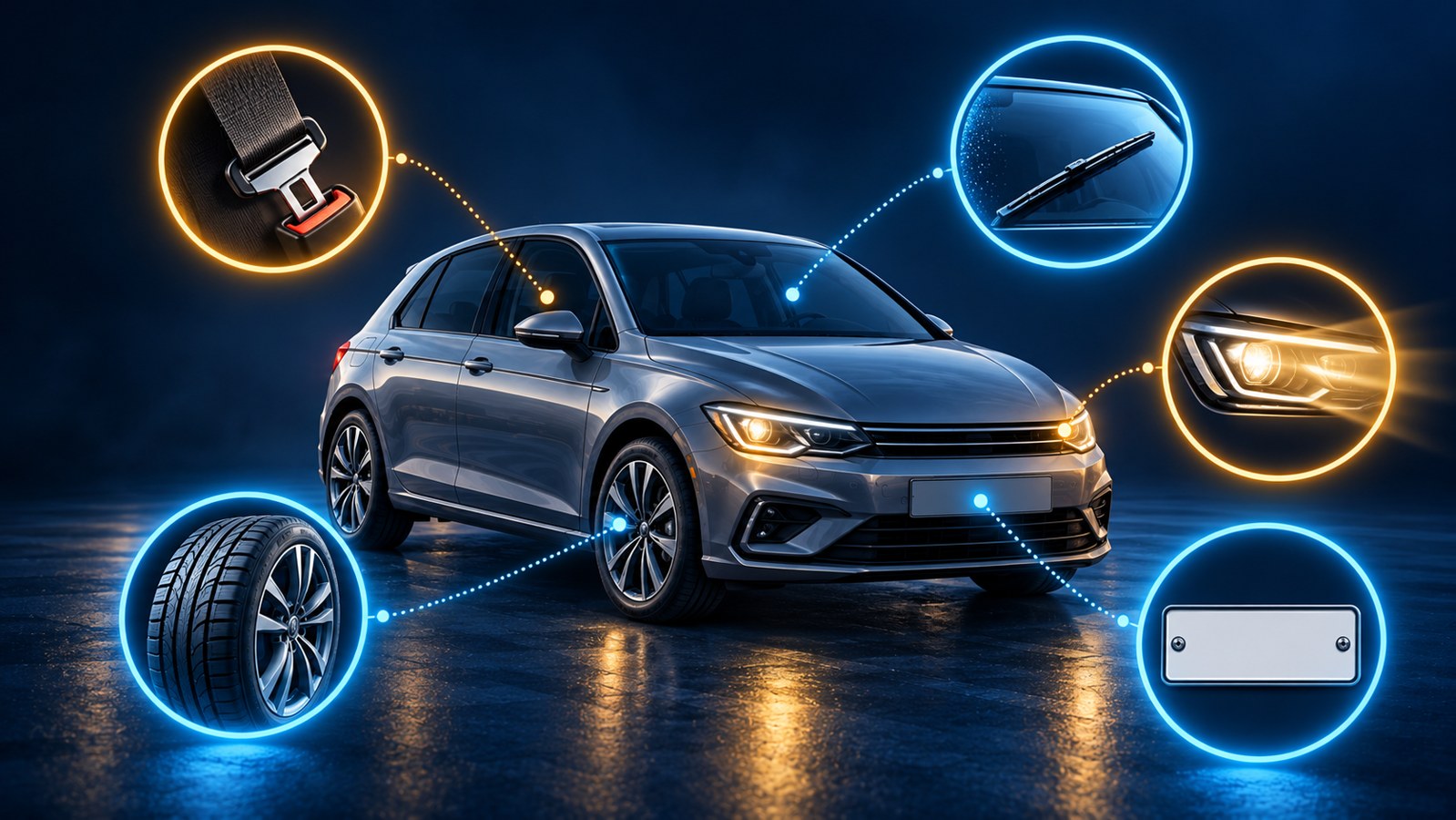
1. Lights
Check sidelights, dipped and main beams, indicators, brake lights, number plate lighting and the condition of the lamp units. Have any failed light, intermittent operation or suspected alignment problem examined.
2. Visibility
Test the wipers and washers. Look at the windscreen and mirrors: a crack, loose mounting or impaired visibility warrants professional advice.
3. Tyres
Check pressures against the manufacturer's recommendations and look for uneven wear, cuts or deformation. A bulge or uncertainty about tread depth calls for an examination.
4. Seat belts and horn
Check that seat belts buckle and retract, and that the horn works. Have damaged webbing or an unreliable buckle addressed.
5. Registration plates
Make sure the plates are legible and securely attached. Have a damaged plate replaced or a faulty mounting fixed.
These are accessible observations, not the full inspection procedure. In the 2025 light vehicle inspection report, wheels, tyres and suspension, lighting, environmental nuisances and braking were among the groups generating the most follow-up inspections. Source: the ministry's summary of the UTAC-OTC report, in French.
Problems to take to your garage
Vibration under braking, an unusual pedal feel, a car pulling to one side or repeated knocking warrants examination. Note when the symptom occurs; do not attempt a harsh braking test.
Also report persistent warning lights, fluid traces, unusual smoke or exhaust noises. Have the cause investigated rather than simply clearing a fault code.
If the vehicle behaves dangerously, stop using it and arrange professional assistance. The inspection appointment does not replace that intervention: the centre does not repair the car during the examination.
Special cases to know about
- Electric or hybrid: additional checks apply to the powertrain. Specify the type when booking and do not handle high-voltage cables or the traction battery.
- Historic vehicles: age alone is not enough. For a car registered with France's historic vehicle status and first used from 1960 onwards, the interval is generally five years; a car with that status first used before 1960 is exempt. Rules and exceptions, in French.
- Commercial vehicles or special uses: check the schedule for that vehicle, including the additional emissions inspection for applicable vans, in French.
Manufacturer recalls: since January 2026, certain serious recall campaigns are included in the inspection. A vehicle subject to an outstanding “stop drive” instruction may receive a critical defect. Follow any instruction to stop driving as soon as it applies to you, without waiting for the inspection. Official details, in French.
After the inspection: track defects and deadlines
For a car covered by the standard French rules:
- Favourable (A): keep the report and have any minor defects addressed.
- Major defect (S): have repairs completed and the follow-up inspection carried out within two months. The inspection is valid for two months.
- Critical defect (R): validity is limited to the day of the inspection. The two-month deadline for the follow-up inspection does not allow you to drive during those two months.
Follow the report and the follow-up inspection rules, in French. A dangerous condition requires immediate attention, regardless of the administrative deadline.
Keep a record with MotorTrack
MotorTrack lets you keep this inventory in the vehicle's defects and record completed work in its events. If your garage uses MotorTrack Pro, it can request access to your vehicle: you choose whether to accept or refuse, and you can revoke access at any time. The work and mileage readings it adds to the record then appear in your vehicle's history, as read-only entries.
This inventory helps with preparation; it does not determine the inspection result on its own. Keep the inspection report and invoices in your own archives, outside MotorTrack: document storage in the application is not currently available.
Dedicated vehicle inspection reminders and a guided checklist are planned developments. You can use the approach in this article today.
Start my vehicle's history with MotorTrack →
Tracking several vehicles? Read our preventive fleet maintenance guide.
Sources consulted on 19 October 2026. This article mainly covers passenger cars in France.